Acer griseum (Paperbark Maple)
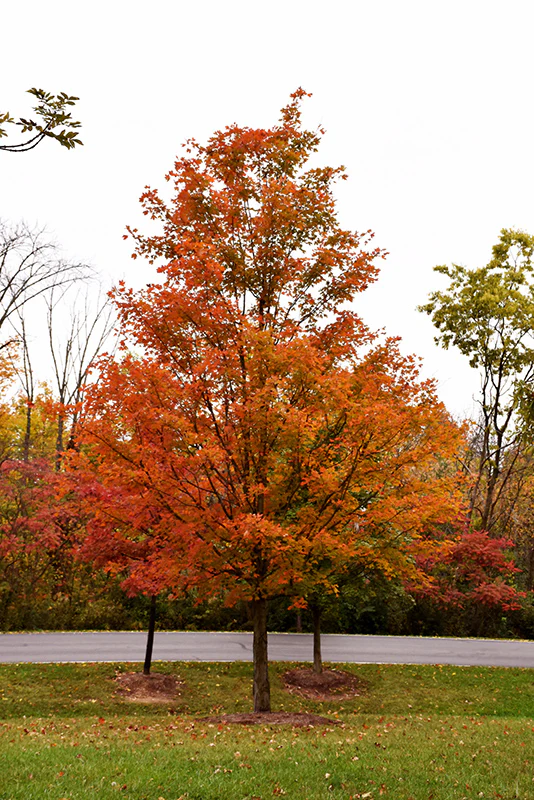
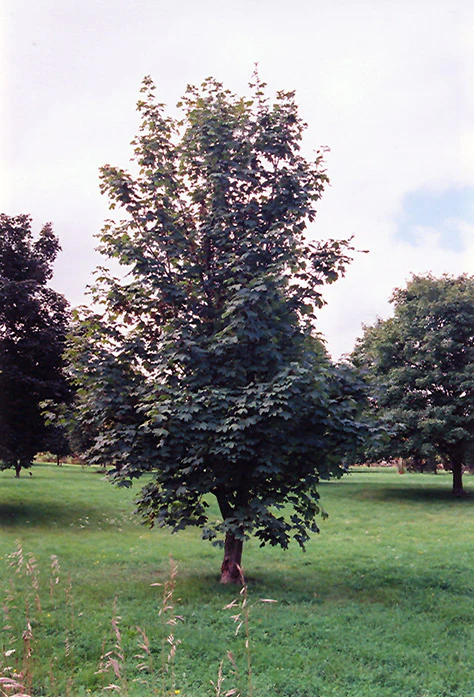
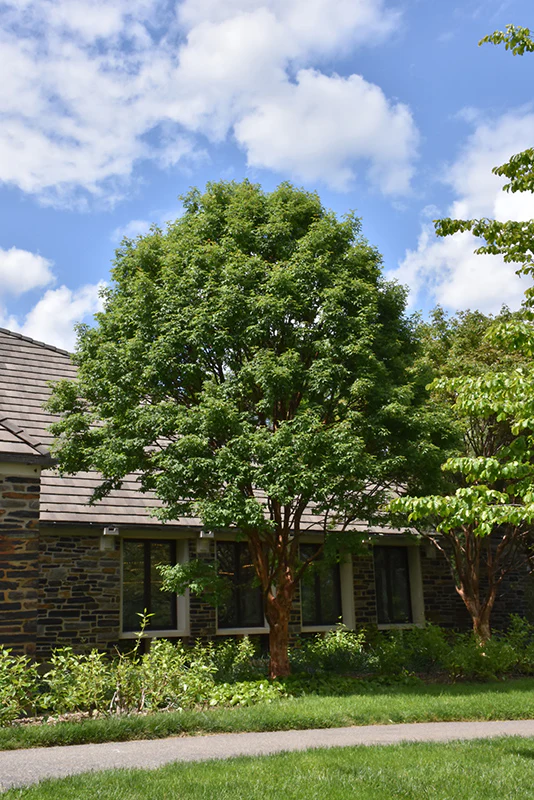
Paperbark Maple will grow to be about 30 feet tall at maturity, with a spread of 25 feet. It has a high canopy with a typical clearance of 6 feet from the ground, and should not be planted underneath power lines. As it matures, the lower branches of this tree can be strategically removed to create a high enough canopy to support unobstructed human traffic underneath. It grows at a slow rate, and under ideal conditions can be expected to live for 80 years or more. This tree does best in full sun to partial shade. It prefers to grow in average to moist conditions, and shouldn't be allowed to dry out. It is not particular as to soil type or pH. It is somewhat tolerant of urban pollution. This species is not originally from North America.
Paperbark Maple will grow to be about 30 feet tall at maturity, with a spread of 25 feet. It has a high canopy with a typical clearance of 6 feet from the ground, and should not be planted underneath power lines. As it matures, the lower branches of this tree can be strategically removed to create a high enough canopy to support unobstructed human traffic underneath. It grows at a slow rate, and under ideal conditions can be expected to live for 80 years or more. This tree does best in full sun to partial shade. It prefers to grow in average to moist conditions, and shouldn't be allowed to dry out. It is not particular as to soil type or pH. It is somewhat tolerant of urban pollution. This species is not originally from North America.
Original: $8.75
-70%$8.75
$2.62Description
Paperbark Maple will grow to be about 30 feet tall at maturity, with a spread of 25 feet. It has a high canopy with a typical clearance of 6 feet from the ground, and should not be planted underneath power lines. As it matures, the lower branches of this tree can be strategically removed to create a high enough canopy to support unobstructed human traffic underneath. It grows at a slow rate, and under ideal conditions can be expected to live for 80 years or more. This tree does best in full sun to partial shade. It prefers to grow in average to moist conditions, and shouldn't be allowed to dry out. It is not particular as to soil type or pH. It is somewhat tolerant of urban pollution. This species is not originally from North America.