Lonicera ciliosa
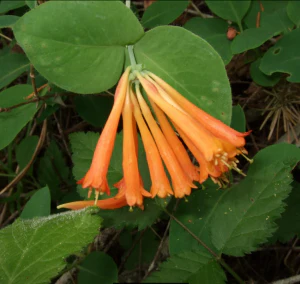
Lonicera ciliosa, commonly known as Orange Honeysuckle or Trumpet Honeysuckle, is a vigorous deciduous climbing vine indigenous to western North America. This twining species reaches heights of up to 20 feet, displaying opposite oval foliage and distinctive hollow stems. The plant's most striking feature is its trumpet-shaped orange-yellow flowers, measuring 2-4 cm in length with five flared lobes, which emerge in terminal clusters above fused leaf pairs. Blooming prolifically from late spring through mid-summer, this species offers both ornamental appeal and significant ecological value for native plant landscapes and pollinator gardens.
Lonicera ciliosa, commonly known as Orange Honeysuckle or Trumpet Honeysuckle, is a vigorous deciduous climbing vine indigenous to western North America. This twining species reaches heights of up to 20 feet, displaying opposite oval foliage and distinctive hollow stems. The plant's most striking feature is its trumpet-shaped orange-yellow flowers, measuring 2-4 cm in length with five flared lobes, which emerge in terminal clusters above fused leaf pairs. Blooming prolifically from late spring through mid-summer, this species offers both ornamental appeal and significant ecological value for native plant landscapes and pollinator gardens.
Original: $7.65
-70%$7.65
$2.29Description
Lonicera ciliosa, commonly known as Orange Honeysuckle or Trumpet Honeysuckle, is a vigorous deciduous climbing vine indigenous to western North America. This twining species reaches heights of up to 20 feet, displaying opposite oval foliage and distinctive hollow stems. The plant's most striking feature is its trumpet-shaped orange-yellow flowers, measuring 2-4 cm in length with five flared lobes, which emerge in terminal clusters above fused leaf pairs. Blooming prolifically from late spring through mid-summer, this species offers both ornamental appeal and significant ecological value for native plant landscapes and pollinator gardens.